Introduction: Easy Recycling and Waste Separation Tips for Every Household
In today’s world, taking responsibility for our waste is more important than ever. Proper recycling and waste separation at home are the first and most crucial steps in reducing landfill, conserving natural resources, and protecting our environment.
For households, it can be confusing to know what goes where. At Bloom Skip Bins, we’re passionate about sustainable waste management, and we believe it starts at your kerb. This guide will simplify the process with practical tips to make your home recycling more effective.
Why Bother Sorting? It’s More Than Just a Bin
Before we dive into the “how,” let’s remember the “why.” Correctly sorting your waste has a powerful impact:
The Golden Rules of Home Recycling
Follow these simple steps to become a recycling pro.
1. Know Your Local Rules (It’s the #1 Rule!)
Different councils have different recycling capabilities. Always check your local council’s website for their specific guidelines. What is recyclable in one area might not be in another. Print out their guide and stick it on the fridge or near your bins as a quick reference.
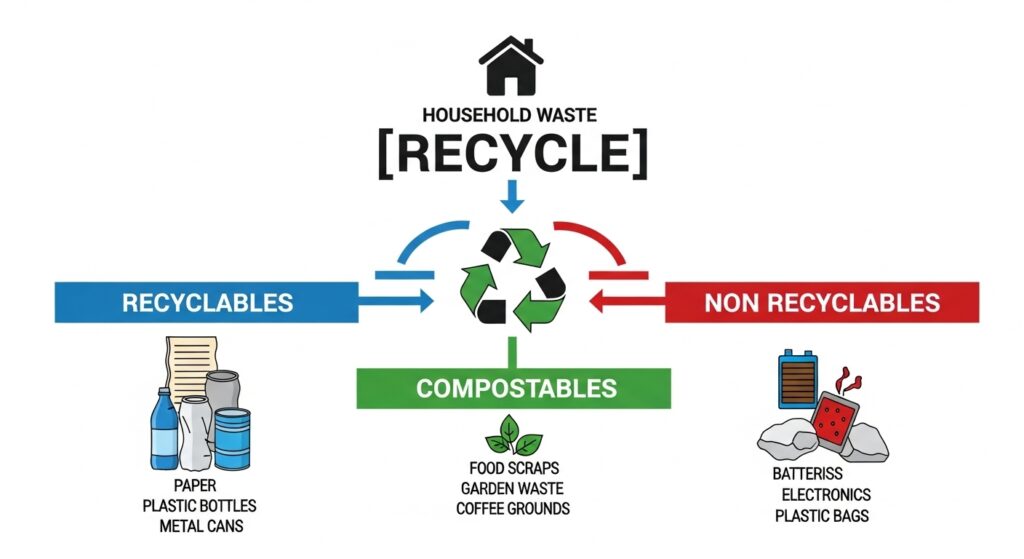
2. The Quick-Check List: What Usually Goes in the Recycling Bin?
While you must confirm with your council, these items are commonly accepted in your yellow-lid bin:
3. The “No-No” List: What to Keep Out of Your Recycling Bin
Putting the wrong item in the recycling bin can contaminate an entire truckload, sending it all to landfill. Keep these out:
Pro Tip: A great rule of thumb is “When in doubt, leave it out.” It’s better to throw one questionable item in the general waste than to risk contaminating a whole bin of recyclables.
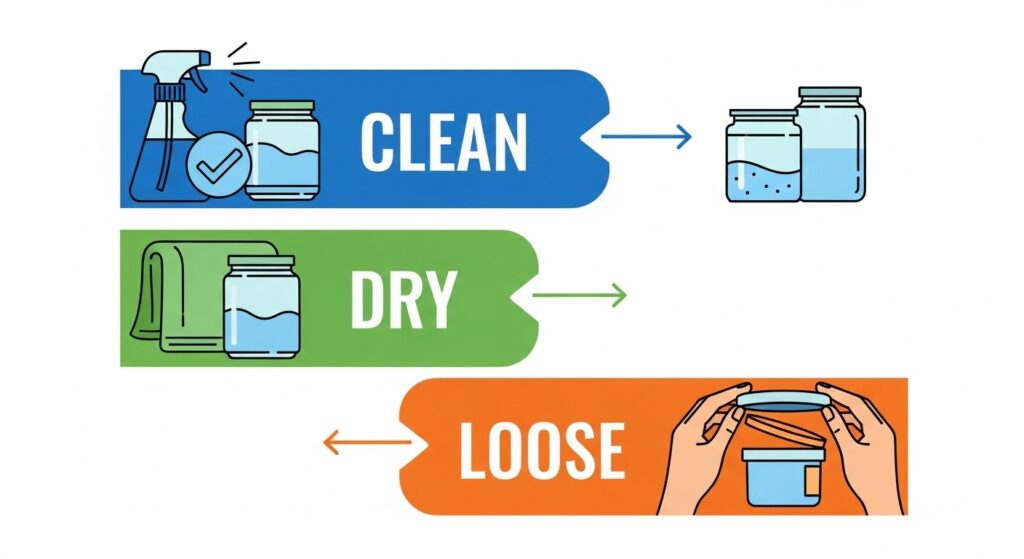
4. Master the Preparation: Clean, Dry, and Loose
How you prepare your recyclables matters just as much as what you put in the bin.
5. Set Up an Efficient Home Sorting Station
Make sorting easy for the whole family with a simple system.
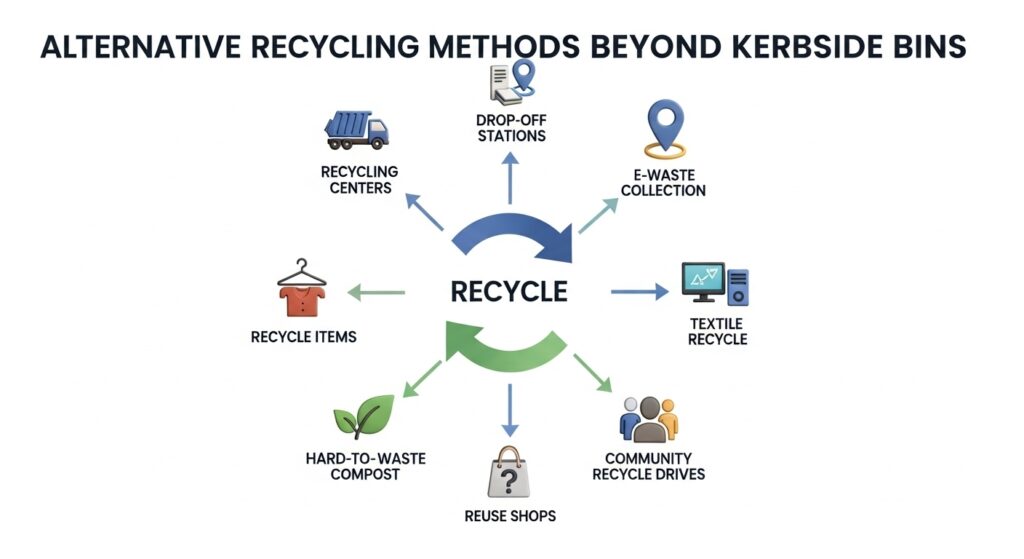
Beyond the Kerbside Bin: Other Ways to Recycle
Many items shouldn’t go in your kerbside bin but can still be recycled.
How Bloom Skip Bins Supports Your Recycling Efforts
When you hire a skip bin from us for your larger clean-ups, our commitment to the environment continues. We don’t just take your waste to the dump.
After collection, we transport the waste to dedicated transfer stations where materials are further sorted. Our team ensures that as much of your waste as possible is recovered and redirected to recycling facilities, keeping it out of landfill.
By being a recycling hero at home, you’re making a direct, positive impact on our local environment and community.
Need a Hand with a Bigger Project?
Even with the best home sorting, some projects—like a major garden makeover, a renovation, or a large-scale declutter—generate more waste than your kerbside bins can handle.
When that happens, you can count on Bloom Skip Bins for responsible waste management. We provide clear guidelines on how to sort waste into our bins to maximise recycling and offer a range of sizes to suit any job.
Got a project in mind? Get an instant, transparent quote today and choose the eco-friendly skip bin solution.